
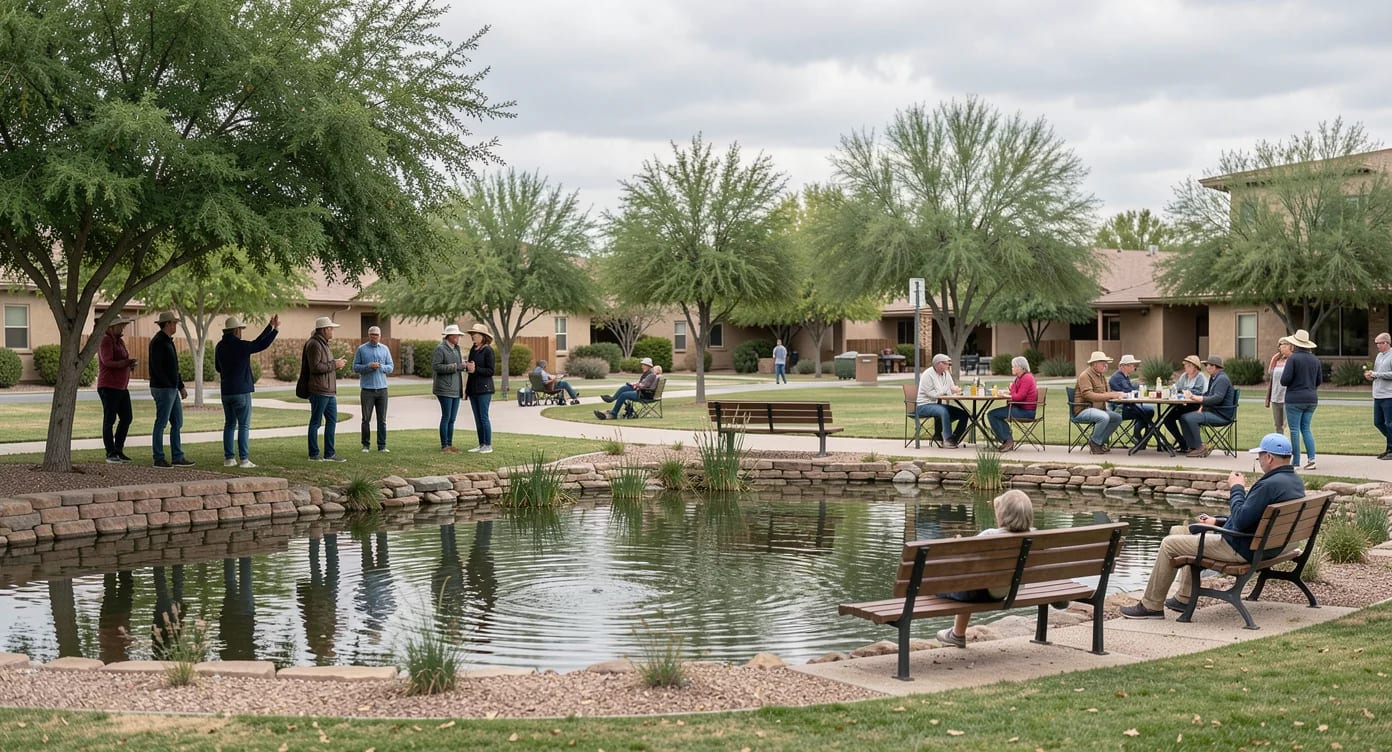
Queen Creek’s appeal comes into focus when you explore beyond the listing photos: a park outing, a trail walk, and an errand in the town center each reveal a different side of the area. Here’s how to connect those everyday experiences with a thoughtful home search or sale.
A closer look at the town center
Start near Queen Creek Town Center, where places to eat, shop, and run errands bring a practical rhythm to the surrounding area. From there, the town opens into residential streets, parks, and stretches of desert landscape. It’s a useful starting point for understanding how different parts of Queen Creek fit together—and how a short drive can change the feel of a day.
The town’s agricultural past remains part of its character, even as residential and commercial development has added new places to gather. The Queen Creek Olive Mill offers one way to experience that connection to the land, with locally produced olive oil, food, and opportunities to learn about olive growing. Check current hours and offerings before planning a visit.
For a more complete picture, visit the town center at different times. Notice how you would reach the places on your regular errand list, where you would park, and whether the route feels convenient for your routine. A map is a helpful first step, but an in-person visit reveals details that a pin on a screen cannot.
Parks and trails shape the everyday landscape
Mansel Carter Oasis Park is one of the local places to see Queen Creek’s outdoor amenities firsthand. Its recreation areas and walking paths make it a useful stop when comparing what is available near different homes. Take a look at the park layout, shade, parking, and facilities that matter to you, and check the town’s current information for hours and any activity restrictions.
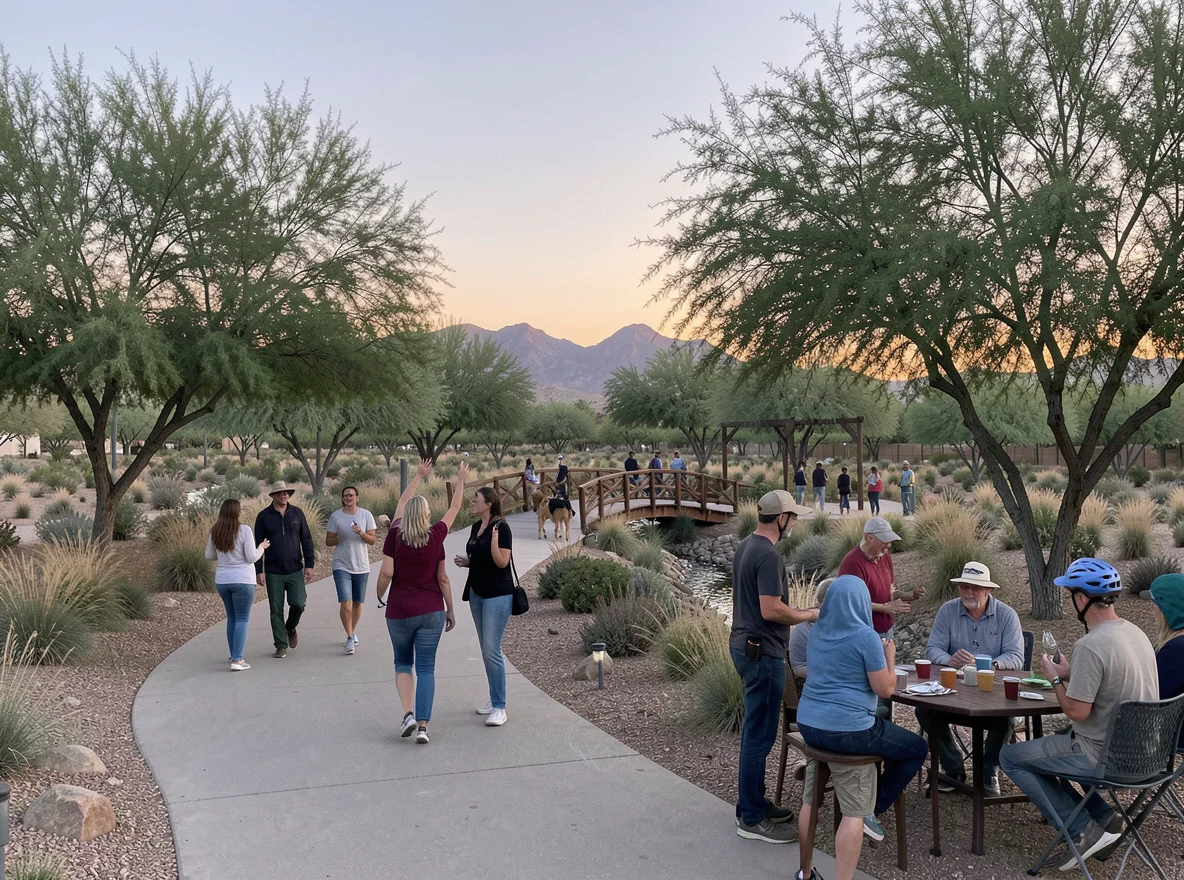
The Queen Creek Wash Trail offers another perspective on the area. Rather than assuming every home has a direct connection, look at the specific access points and street crossings near a property. If a walking or cycling route is important to you, try the journey from the home itself and note the distance, surfaces, and intersections along the way.
A home described as “near a trail” may be close on a map but farther from an actual access point. Check the route from the front door, not just the distance to the trail corridor.
Season and time of day matter in the desert. Early outings can make a significant difference during warmer months, and water, sun protection, and an awareness of the forecast belong in any outdoor plan. A winter visit and a summer visit can feel very different, so consider how shade and exposure may affect the routes you use most.
For a broader desert outing, San Tan Mountain Regional Park offers trails and mountain scenery beyond the town’s residential streets. Review the park’s current trail conditions, rules, and fees before heading out. If outdoor access is a priority in your search, compare the actual drive from each property rather than relying on a general description of the area.
Reading the streets around a home
Queen Creek is not a single streetscape. One property may sit near a busier route and everyday services; another may be set farther into a residential community. Lot layout, landscaping, traffic patterns, and the location of entrances can all influence how a particular address feels. Those details are worth examining separately from the home’s interior.
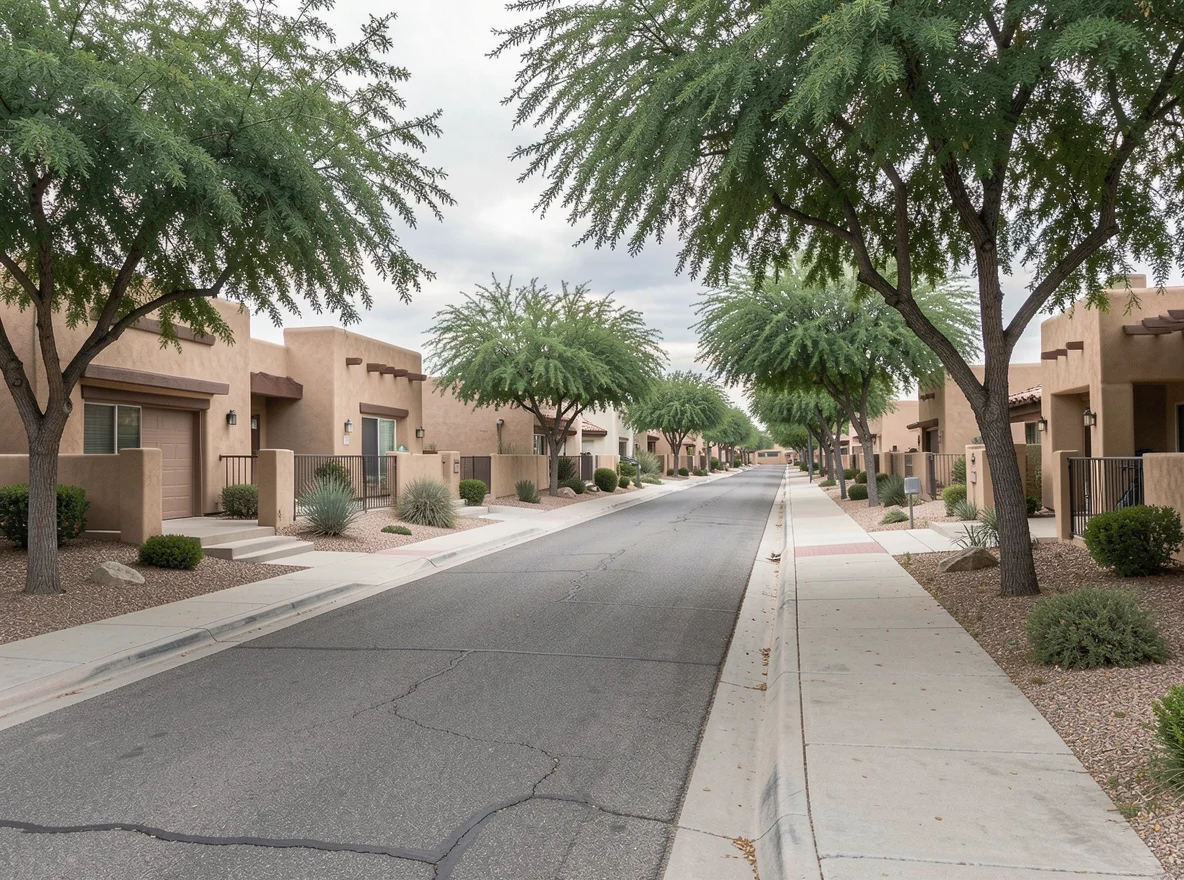
Walk or drive the immediate surroundings during a showing. Look for sidewalk connections, street lighting, nearby intersections, and the relationship between the home and neighboring properties. If you expect to spend time outdoors, consider the orientation of the patio or yard and where shade falls at the times you are most likely to use it.
Also ask about community features and responsibilities. Some properties are part of an association with dues, rules, or shared amenities; others are not. Review the applicable documents and costs for each home rather than assuming that two nearby properties come with the same arrangements.
Schools, dining, and daily services may also influence a property search. Verify school assignments directly with the relevant district, since boundaries and availability can change. For dining and shopping, try the routes you would actually take and check current business hours. Convenience is most meaningful when measured against your own schedule.
What buyers and sellers can learn from location
For buyers, the most useful comparison goes beyond a list of nearby amenities. Consider the home’s condition, floor plan, lot, association costs, and access to the places you use. Then compare those features with current listings and recent comparable sales. Asking prices and available inventory can change, so a current review is more useful than a broad claim about where the market is headed.
Sellers can use the same local perspective when preparing a property. A listing that accurately describes its outdoor spaces, routes to nearby amenities, and community features gives buyers useful context. Make sure claims about trail access, school assignments, or association amenities are verified, and let the property’s actual features do the talking.
Questions to bring to a showing
- Where are the nearest practical entrances to parks or trails, and how do I reach them?
- What are the current association dues, rules, and included amenities, if any?
- How do the home’s layout, shade, and outdoor spaces work at different times of day?
- Which recent comparable sales help put the asking price in context?
- What should I verify about schools, utilities, and planned work near the property?
These questions can turn a pleasant tour into a more informed decision. They also give sellers a starting point for gathering property information before a home goes on the market.
Make the visit your own
A good Queen Creek visit might include a walk in a park, a look at a trail access point, lunch near the town center, and a drive past a few properties. Leave room to notice the less photogenic details, too: travel routes, afternoon shade, and the way each street connects to the places you want to go.
Whether you are considering a purchase or preparing to sell, local context is most valuable when paired with current property information. Emily Laufer can help you compare homes and look at the details that matter to your next move.